
Applies to: ROV & diver intervention →
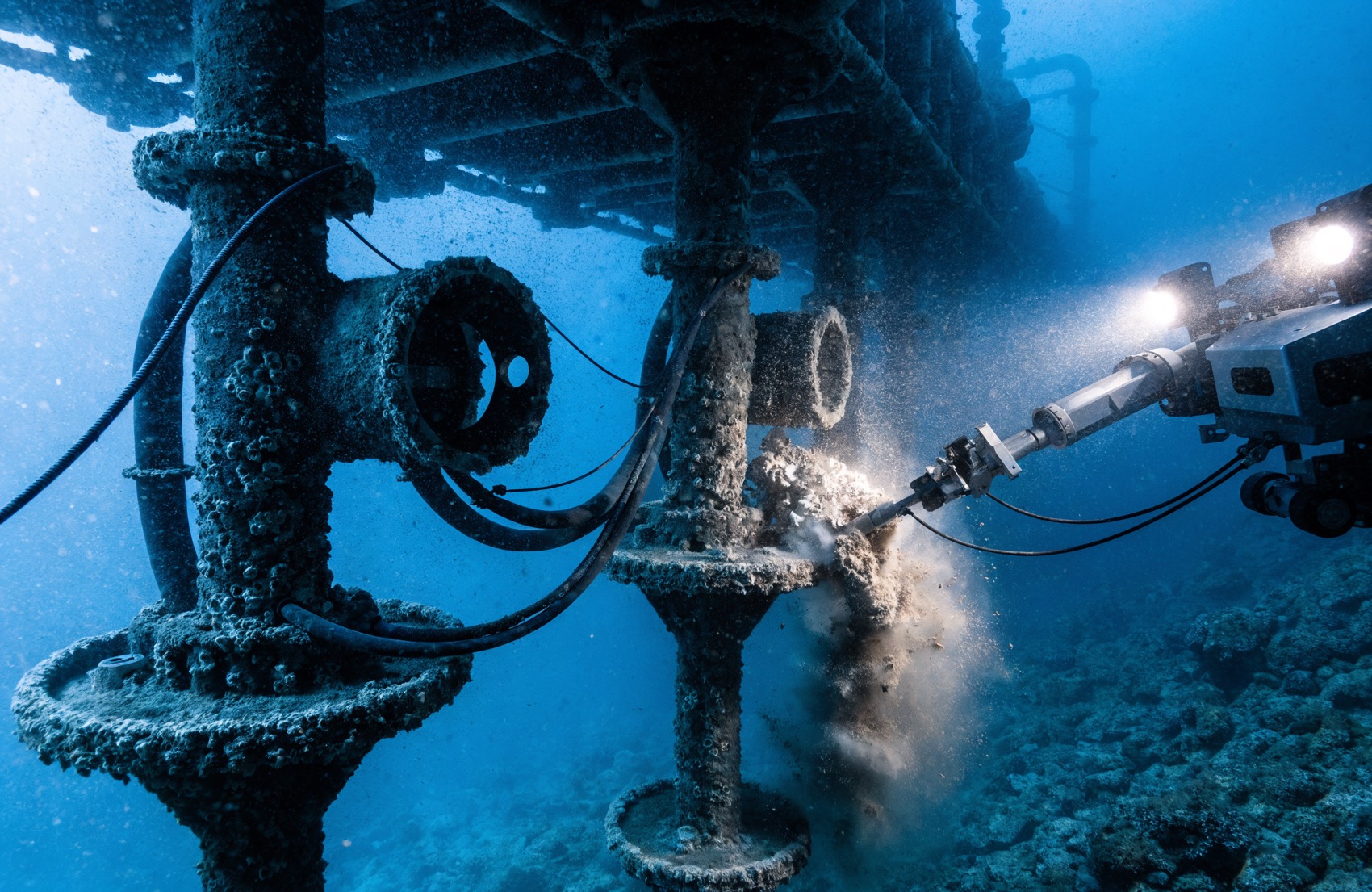
Every visit to clean marine growth off subsea identification has a day rate behind it. Multiply that across the life of a field and the number surprises people. Put your own figures in below to see the whole-life picture.
Why the number is bigger than it looks
The headline cost of traditional marking is the marker itself, which is small. The cost that actually accumulates is access. A cleaning visit is rarely just the cleaning: it is the ROV or diver time, the vessel share, the planning, and the intervention window. On a worked example of 40 marked assets, cleaned once a year at eighteen hundred pounds a visit over a twenty-year remaining life, the model above puts the whole-life cleaning cost well into seven figures.
Anti-fouling does not make the marker cheaper. It removes an entire recurring line from the whole-life cost, and the risk that goes with an unreadable asset.
What the calculator does not include
It deliberately keeps to the direct cleaning cost, because that is the figure a specifier can defend. It does not price the harder-to-quantify items: the delay when identification cannot be read during an intervention, the audit exposure of an asset that is not clearly marked, or the safety margin lost when a valve cannot be confirmed. Those all point the same way.
Model it against your own field
Send us the asset count and access assumptions and we will help you build a defensible whole-life comparison.
Talk to an engineer