
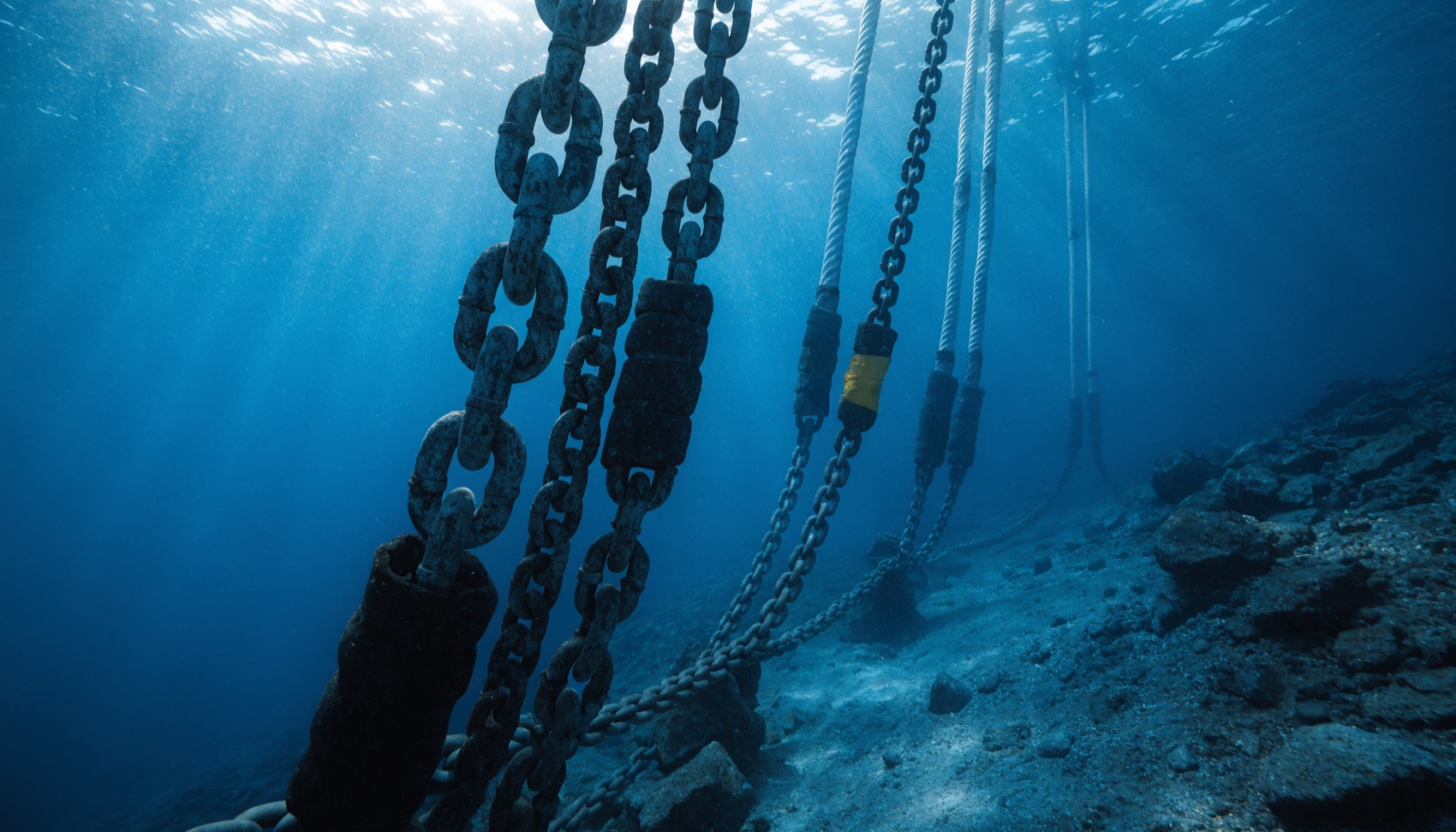
Mooring integrity is critical to the safe operation of a deepwater FPSO, and it depends on inspecting the right component at the right time. Anchor legs, fairleads, connectors, support buoys and the touch-down area each carry risk, and each has to be identified before it can be inspected or gauged.
The challenge
Mooring inspection is a phased, expensive activity: divers gauge critical chain links for pit depth and wall-thickness loss, and ROVs run calliper systems subsea. Marker buoys already identify chain and riser positions at the surface. Below the waterline, on chains and connectors that foul quickly, durable identification is what lets an inspection team be sure they are measuring the leg they think they are.
How Aquasign helps
Aquasign markers stay legible on chain links, fairleads, connectors and buoys through the fouling and dynamic loads of a mooring environment.
- Durable identification on anchor legs, connectors and support buoys.
- Clear component marking that speeds phased inspection and gauging.
- Non-toxic and maintenance-free, on assets that are costly to revisit.
Managing mooring integrity?
We will help you identify legs, connectors and buoys so inspection targets the right component every time.
Talk to an engineerThe content cluster
Related reading for this application
Deeper material that maps to floating production and moorings.
The quiet risk in FPSO mooring identification
When identification fails on a chain or buoy, inspection slows and risk rises.
Read →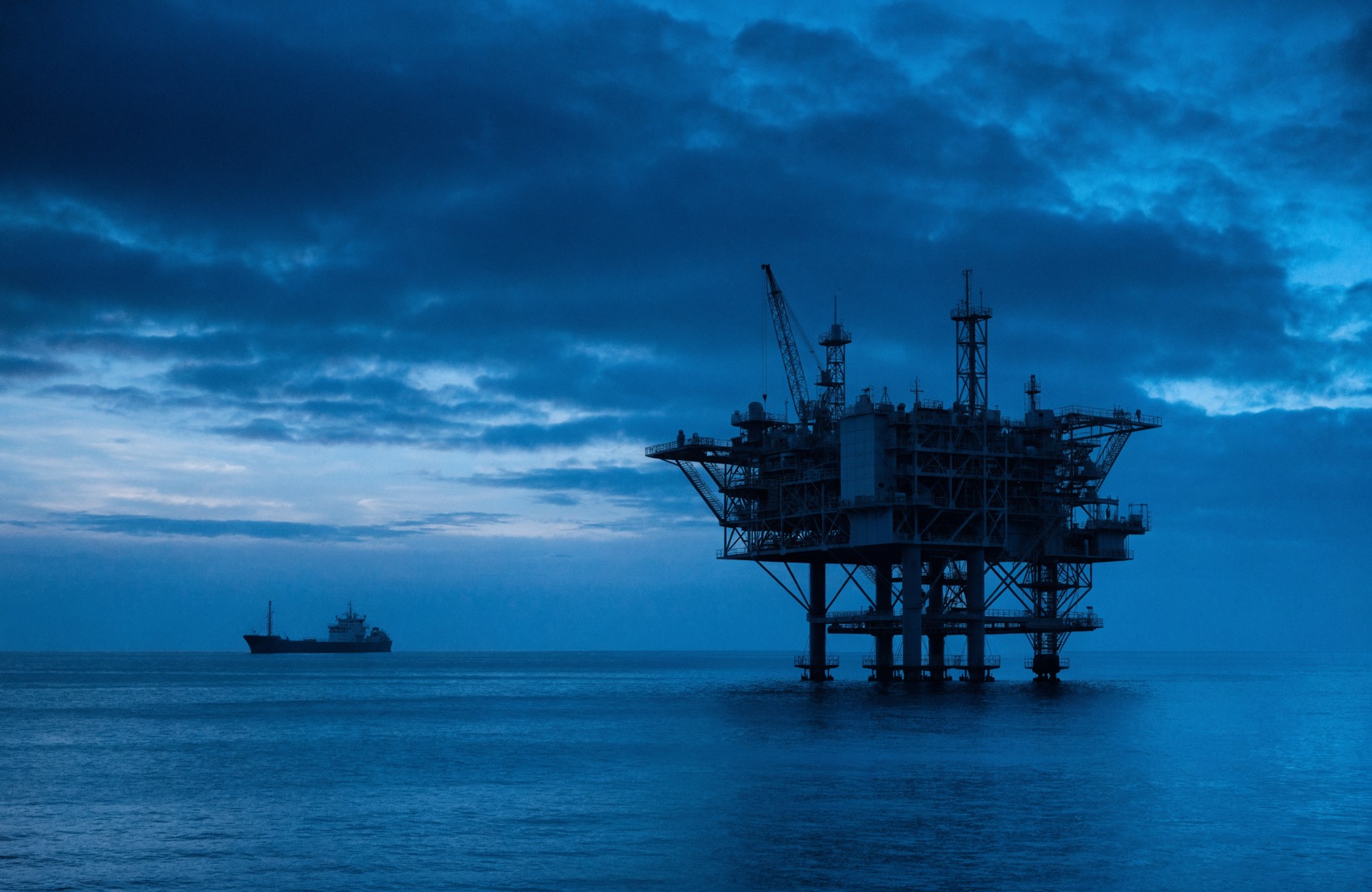
FPSO mooring & buoy identification
An illustrative scope: identifying legs, buoys and connectors for inspection.
Read →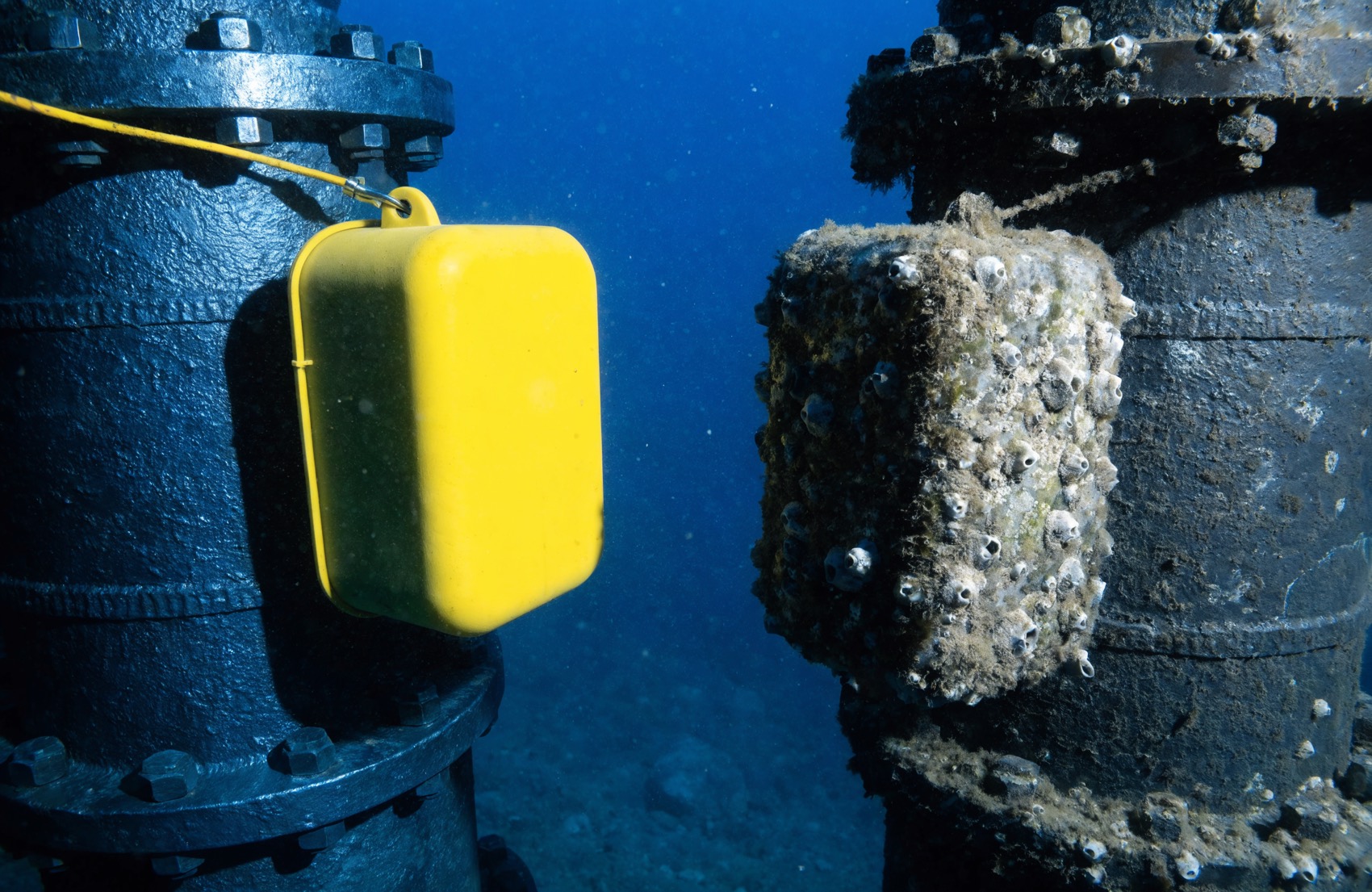
Anti-fouling vs traditional marking
Why durable identification wins over field life.
Read →