
Applies to: Pipelines & flowlines →
Traditional subsea marking looks fine on installation day. The question is what it looks like on an inspection dive eight years later. Compared on the axis that actually decides a subsea spec, the difference over field life is larger than most specifications assume.
Most comparison tables in this category are feature grids. Every supplier has one, so they settle nothing. The distinctions that actually matter subsea are about durability, whole-life cost, and how each option stands up in a standards review. Here is the honest comparison on those axes.
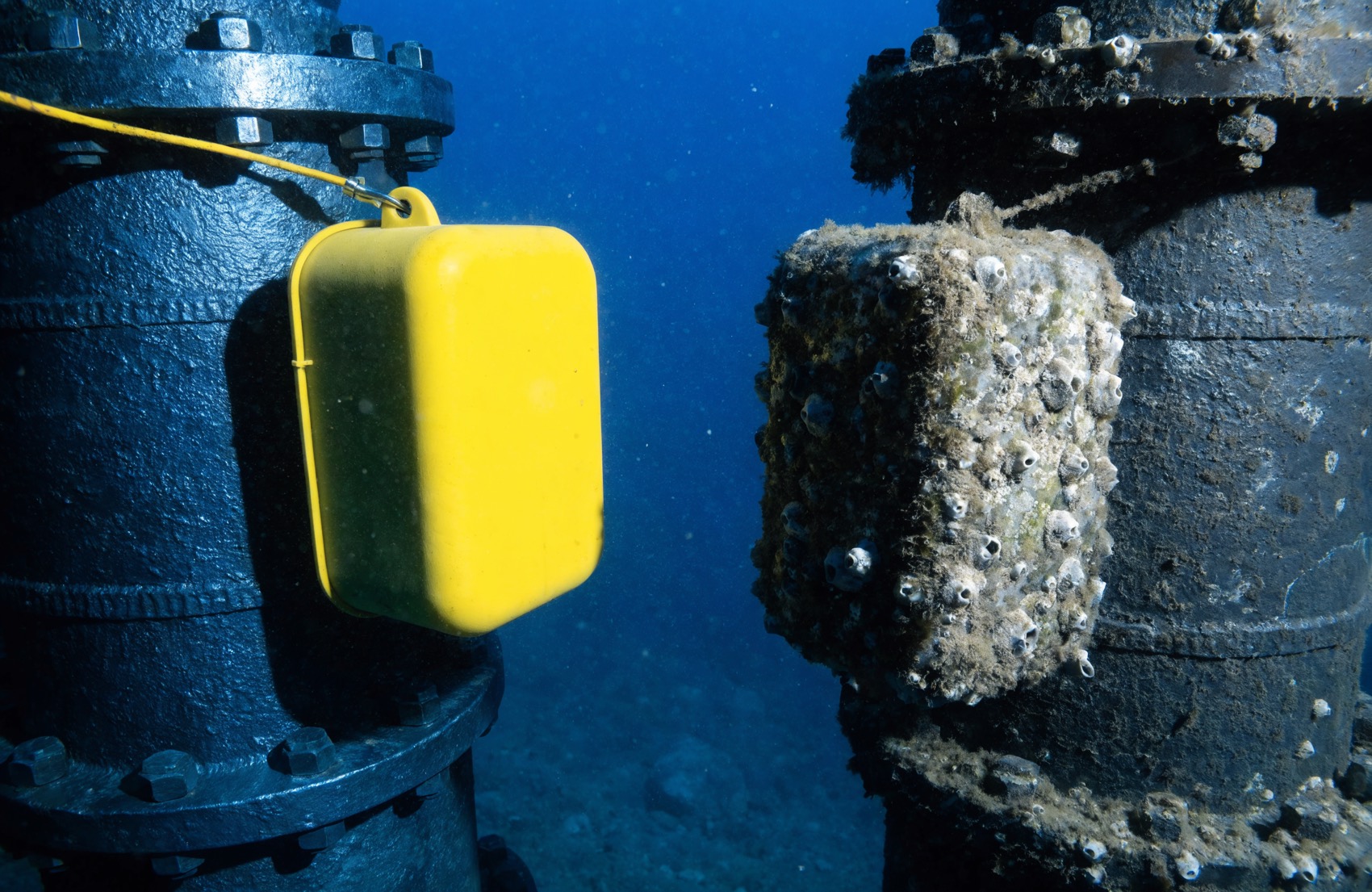
Where the difference shows up
| Axis | Traditional marking (paint, tags, plates) | Aquasign anti-fouling marker |
|---|---|---|
| Legibility over time | Can foul, corrode or fade within a few years, needing cleaning to read. | Sheds marine growth as it ages; stays legible for the life of the asset. |
| Maintenance | Recurring ROV or diver cleaning to keep it readable. | No maintenance; the anti-fouling mechanism is passive and continuous. |
| Whole-life cost | Low up front, but cleaning day rates accumulate across field life. | Higher up front, lower over the life once cleaning is removed. |
| Audit defensibility | Hard to guarantee legibility at a future inspection. | Guaranteed performance, backed by testing and a 60-year guarantee. |
| Environmental | Some coatings use biocides. | 100% non-toxic; no biocide leaching. |
The up-front price is where traditional marking wins. The whole-life cost, and the risk of an unreadable asset when it matters, is where it loses.
When traditional marking is still fine
This is not an argument that traditional marking is never right. For short-life assets, splash-zone or topside work that is easy to reach and re-mark, or temporary identification, conventional methods can be perfectly sensible, and we make topside signage by exactly those methods. The case for anti-fouling is strongest where access is expensive, the asset life is long, and an unreadable marker carries real integrity or safety cost.
Put a number on it
Our calculator models the whole-life cost of keeping traditional marking legible for your scenario.
Open the cost calculator